
Just Embarrassing for Fiji: Fiji Wants Climate Money — But What Is Fiji Doing Itself?
Australia is spending A$20 million on a UN climate pre-summit in Fiji. Meanwhile the industrial hemp industry Fiji legally enabled in 2022 still has not been rolled out.
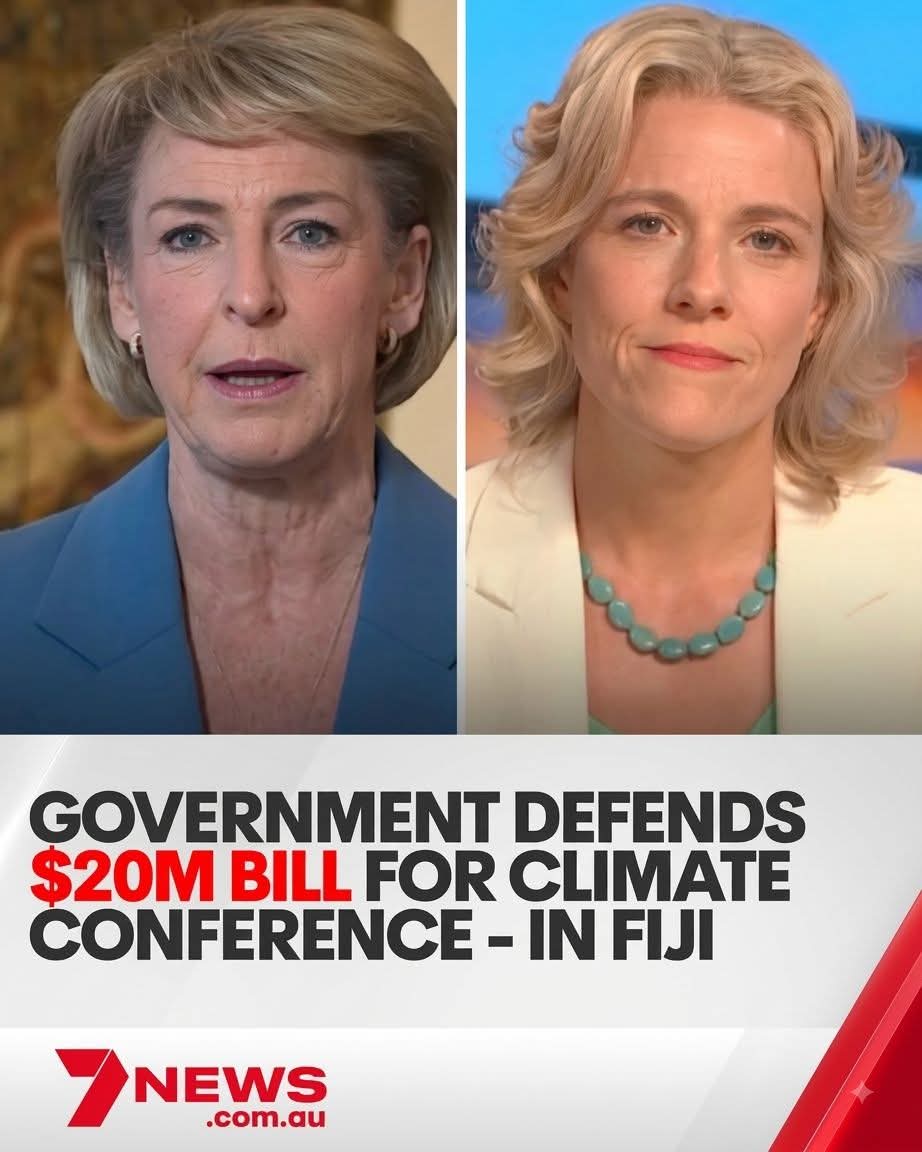
JUST EMBARRASSING FOR FIJI
Fiji Wants Climate Money — But What Is Fiji Doing Itself?
Australia is putting substantial taxpayer money behind the climate process in Fiji.
On 12 August 2026, 7NEWS reported that the Australian Government is spending A$20 million of Australian taxpayers' money on the UN Climate Pre-Summit being held in Fiji, with more than A$17 million reportedly allocated to event management, about A$2 million for broadcasting and another A$2 million for resort accommodation. The Australian Government has defended the expenditure as critical to Australia's climate leadership.
But there is another problem Australian taxpayers have every right to ask about: who is actually coming? As of 14 August 2026, reporting indicates that Australia and the Pacific Islands Forum are still struggling to secure commitments from world leaders for the Fiji Pre-COP, with no confirmed positive RSVPs from major international leaders publicly established. That matters because the Australian Government has justified the expense on the basis of global climate diplomacy and influence. If the major players do not show up, the Government will have to explain what Australian taxpayers actually received for the money spent.
Separately, Australia's 2026–27 Budget provides A$147.8 million over three years to support Australia's COP31 role and Pacific engagement, including the Pre-COP and Leaders' Event.
That is a substantial commitment.
And it makes Fiji's own climate performance worth examining.
Because while Australia is putting serious public resources behind the Pacific climate process, Fiji is asking the wider international community for more climate finance while an industrial opportunity Fiji legally opened the door to four years ago still has not been rolled out.
That opportunity is industrial hemp.
THIS IS WHERE THE HYPOCRISY STARTS
And that is the uncomfortable question sitting underneath all of this: what happens if Australia spends millions to bring the world to Fiji — and the world largely does not come? The event could still deliver meaningful Pacific outcomes, and the attendance picture could change before October. But if it does not, Australians are left with a very simple question: was this a climate investment with measurable returns, or an expensive exercise in international theatre?
Fiji has every legitimate reason to pursue international climate finance.
But a country asking the world to do more should also be able to demonstrate what it is doing itself.
And this is where the picture becomes uncomfortable.
In 2022, Fiji amended the Illicit Drugs Control Act to create a legal pathway for hemp containing no more than 1% THC. Fiji's rules also provide for laboratory certification of the THC threshold. The Fiji Times reported in May 2026 that the industrial-hemp opportunity has still not been effectively seized and that implementation remains slow.
The Government had already discussed the development of an industrial-hemp industry.
Four years later: Where is it? Where are the commercial farms? Where are the processing facilities? Where is the manufacturing? Where are the farmer programmes? Where is the export industry? Where is the serious national hemp strategy?
WHAT ARE WE LEAVING ON THE TABLE?
Industrial hemp is obviously not a magic answer to climate change.
But it is a serious agricultural, environmental and industrial opportunity.
Hemp produces fibre for textiles and paper, material for composites, biomass for bio-based products and inputs for construction products including hemp-based insulation and hempcrete.
Its contribution to soil resilience, crop diversification, biomass production and carbon-related outcomes also warrants serious investigation under Fijian conditions.
And then there is the economic opportunity: farmers → processing → manufacturing → construction → domestic consumption → exports → jobs → rural income → value added in Fiji.
This is bigger than one crop.
It is about whether Fiji is prepared to build its own green industries rather than continually looking overseas for climate finance to fund solutions.
If it works, develop it. If it does not, prove it.
But leaving the opportunity sitting on the shelf achieves nothing.
THEN LOOK AT THE MONEY
Fiji is not quietly standing on the sidelines of international climate finance.
In May, Fiji reported approximately FJ$142.7 million mobilised in climate finance during 2025 through external partnerships, development partners and accredited entities.
In April, Environment and Climate Change Minister Lynda Tabuya said her ministry was managing approximately FJ$192 million in externally sourced climate funding, compared with a domestic allocation of around FJ$13–16 million.
Those figures do not mean unrestricted cash simply sitting in Fiji's accounts. They reflect externally sourced climate funding being pursued and administered through the Government's climate-finance system.
But they demonstrate the scale of the international financing effort.
And they make one question unavoidable: What is Fiji doing alongside it?
NOW LOOK AT THE CLIMATE RHETORIC
In June, Lynda Tabuya represented Fiji at the Global Environment Facility Assembly in Samarkand and called for climate finance to be simpler, faster and grant-based.
That is Fiji's right. Pacific nations have legitimate climate-finance needs.
But international support should strengthen domestic action, not become a substitute for it.
Because what does it say about climate leadership when Fiji is asking the world for more resources while an industrial opportunity already legally enabled in Fiji remains undeveloped?
That is the embarrassment. Not that Fiji asks for help. Not that Fiji fights for Pacific climate finance.
The embarrassment is the gap between what Fiji demands internationally and what Fiji delivers domestically.
And now that Australia is publicly debating millions of taxpayer dollars being spent on a climate summit in Fiji, that contrast is even harder to ignore.
THE QUESTION FIJI CANNOT AVOID
Fiji should absolutely continue demanding international climate finance.
But climate leadership cannot simply be measured by conferences, speeches, funding requests or international recognition.
It has to be measured by what Fiji is prepared to build, test, fund, develop and deliver.
Industrial hemp is sitting right in the middle of that question.
Fiji opened the legal door in 2022. Four years later, the industry still has not been rolled out.
So before Fiji asks the world for even more money, perhaps the Government should answer one brutally simple question: If Fiji is serious enough about climate change to ask the world to pay more, why isn't Fiji serious enough to develop the opportunities it already has at home?
That is what climate leadership looks like.
Sign this petition today and be part of the change — let's go Fiji!
Sign the petition on Change.org →The Missing Voices: Where Were Fiji's Environmental Watchdogs During the Natadola ICT Debate?
A major national development project raised questions about consultation, environmental accountability and transparency. This investigation asks why established environmental voices were not publicly visible during the debate.
8,000 Plants Seized. But Fiji Must Also Answer a Bigger Question: What Happens Next?
The Fiji Police Force carried out its duty under current law. But the seizure of nearly 8,000 suspected cannabis plants also exposes the policy crossroads between prohibition and regulation.
Say No to Data Centres Fiji — Until Transparency, Independent Science, and Meaningful Consultation Come First
A new petition calls on the Government of Fiji to pause data-centre approvals until environmental, legal, and constitutional obligations are met through transparent, independent, and evidence-based process.