America Is Re-examining Dr. Fauci. Is Fiji Ready to Re-examine Its COVID Response?
As the United States scrutinises Dr. Anthony Fauci's role in the COVID-19 response, Fiji has yet to undertake a comparable, independent examination of its own pandemic decision-making. Cannabis Fiji is launching an evidence-based series to follow the facts wherever they lead.
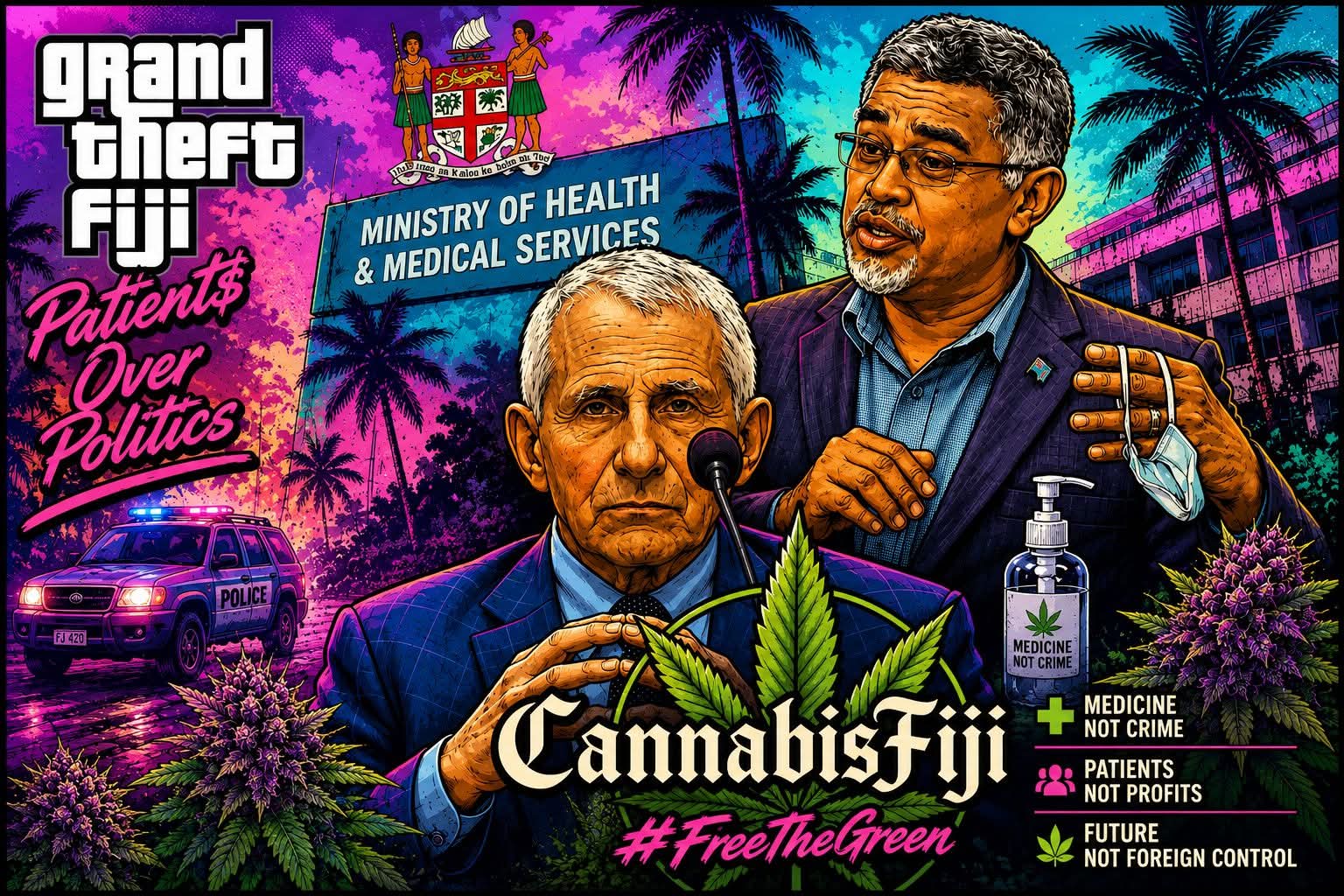
As the United States continues to scrutinize Dr. Anthony Fauci's role in its COVID-19 response through congressional investigations and public debate, Fiji has yet to undertake a comparable, independent examination of its own pandemic decision-making.
This is not a call for a witch hunt.
Nor is it an attempt to prejudge any individual.
It is a call for accountability.
During the COVID-19 pandemic, extraordinary powers were exercised over the lives of Fijians. Businesses closed. Borders were sealed. Schools were disrupted. Thousands of people lost work or had their livelihoods affected. Vaccine policies influenced employment in parts of the workforce. Lockdowns restricted movement. Fundamental rights were limited under emergency public health measures.
Every one of those decisions was made, authorized, recommended, approved, or enforced by someone.
Years later, many questions remain unanswered.
Who made the decisions? Who provided the scientific advice? Who approved the regulations? Who exercised the legal powers? Who oversaw enforcement? Were the measures lawful, proportionate, and supported by the evidence available at the time? Were mistakes made? If so, who is accountable?
Cannabis Fiji is launching an evidence-based investigative series to answer those questions through official records, legislation, Cabinet decisions where available, parliamentary proceedings, public statements, scientific evidence, court decisions, and the historical record.
This investigation will not begin with a conclusion.
If the evidence shows Fiji's leaders acted lawfully, proportionately, and in good faith under the circumstances, we will report that.
If the evidence reveals failures in governance, transparency, legal compliance, or accountability, we will report that with equal honesty.
Democracy is not weakened by difficult questions. It is weakened when difficult questions are never asked.
The purpose of this investigation is simple: not to find a scapegoat, but to establish the truth. Because every exercise of extraordinary public power deserves extraordinary public accountability.
Editorial Note: While this article is not about cannabis, Cannabis Fiji's mission extends beyond cannabis law reform. We are committed to promoting transparency, accountability, constitutional rights, evidence-based policymaking, and good governance on issues that affect the health, freedoms, and wellbeing of all Fijians. Holding public institutions accountable and encouraging informed public debate are essential to a strong democracy. This investigative series is intended to examine Fiji's COVID-19 response fairly, objectively, and in the public interest by following the evidence wherever it leads.
Sign the petition for change and stand for accountability, evidence, and a smarter Fiji. https://www.change.org/p/decriminalize-cannabis-in-fiji-for-our-health-wealth-and-justice
Sign the petition on Change.org →Just Embarrassing for Fiji: Fiji Wants Climate Money — But What Is Fiji Doing Itself?
Australia is spending A$20 million on a UN climate pre-summit in Fiji. Meanwhile the industrial hemp industry Fiji legally enabled in 2022 still has not been rolled out.
The Missing Voices: Where Were Fiji's Environmental Watchdogs During the Natadola ICT Debate?
A major national development project raised questions about consultation, environmental accountability and transparency. This investigation asks why established environmental voices were not publicly visible during the debate.
8,000 Plants Seized. But Fiji Must Also Answer a Bigger Question: What Happens Next?
The Fiji Police Force carried out its duty under current law. But the seizure of nearly 8,000 suspected cannabis plants also exposes the policy crossroads between prohibition and regulation.